
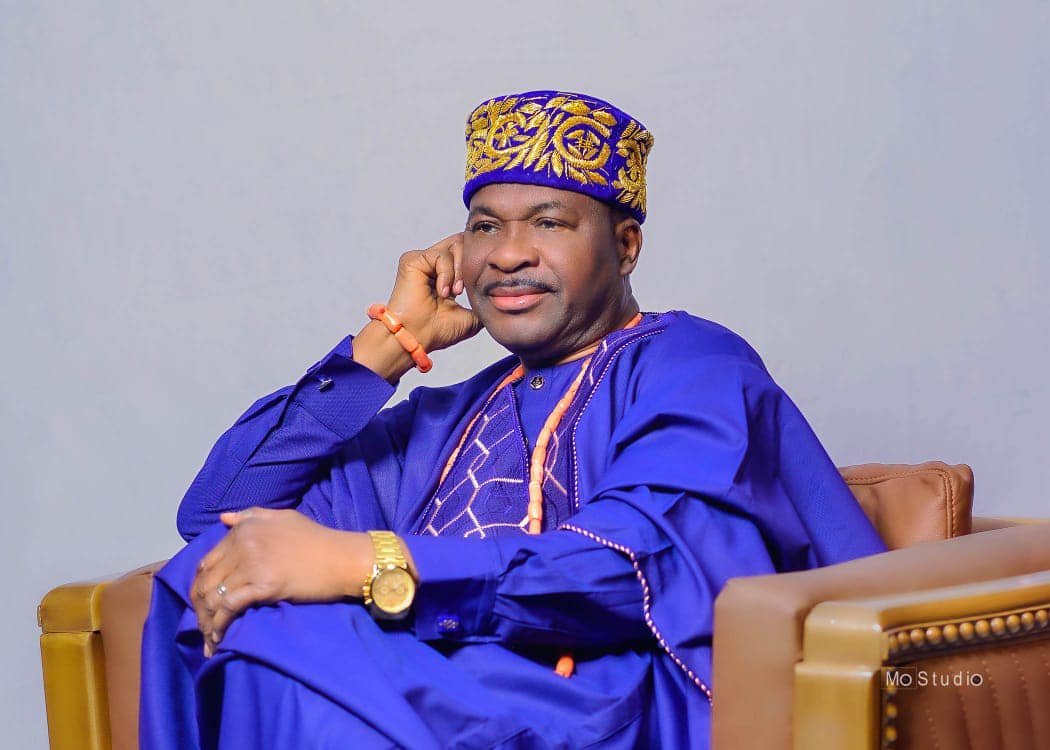
The Office of the Attorney-General of the Federation (AGF) on Friday arraigned senior lawyer Mike Ozekhome and a co-defendant on 12 charges of forgery and impersonation before the FCT High Court in Maitama, Abuja.
The prosecution accused Mr Ozekhome and his co-defendant, Ponfa Useni, of forgery of documents including a passport and an irrevocable power of attorney to lay claim to a property in London.
They pleaded not guilty to the charges, following which the court granted them bail at N10 million bond each.
It comes just days after the AGF office withdrew the original case of three counts and subsequently, within hours, refiled an amended version of the case with 12 counts. The developments took place on Tuesday.
Mr Ozekhome was the sole defendant in the earlier charges filed by the Independent Corrupt Practices and other related offences Commission (ICPC).
The Nation newspaper reported that defence lawyers Tayo Oyetibo and F. R. Onoja, both Senior Advocates of Nigeria (SAN)s, applied for their clients’ bail after they entered their pleas on Friday.

The prosecution led by Rotimi Oyedepo, a SAN and the Director of Public Prosecution of the Federation (DPPF), did not oppose the bail requests.
The judge, Chizoba Oji, then granted each of the defendants bail in the sum of N10 million with a surety each.
The judge said the defendants’ sureties must own a property in Abuja.
She also ordered the defendants to submit their passports to the court to prevent them from travelling outside the country without the court’s permission.
She gave the defendants a concession to return home should they be unable to meet the conditions before the end of office hours on Friday. But she added that they must fulfil all the conditions by Monday, failing which they would be sent to prison.
The amended charges
According to the amended charges, Messrs Ozekhome and Ponfa Useni conspired in 2020 alongside the late Jeremiah Useni, a retired general who served as the FCT minister during the regime of Nigeria’s late dictator, Sani Abacha, and made “a false Nigerian International Passport No. A07535463 with the name Tali Shani, and purported same to have been issued by the Nigeria Immigration Service” to claim a property in the United Kingdom.
Similarly, the prosecution charged Mr Ozekhome and Ponfa Useni of “using the false passport to facilitate the claim of the property.
According to the prosecution, the document was obtained when Ponfa Useni allegedly falsely “personated Tani Shani, a fictitious person and with such assumed character made a Power of Attorney.”
The prosecution also alleged that Mr Ozekhome helped Ponfa Useni to impersonate Tali Shani in 2020. Together, they allegedly created a fake “Irrevocable Power of Attorney” to help Mr Ozekhome claim the property.
They also allegedly received £18,000 as rent for the property contrary to section 319A of the Penal Code Law, 2009.
The prosecution also accused of making a false document titled: RE: REQUEST FOR AUTHENTICATION OF NIGERIAN PASSPORT NO. A07535463 BELONGING TO MR. TALI SHANI dated 4 May 2023, to claim the property.
The prosecution said the offences contravened and punishments stipulated under various provisions of the Penal Code Law including sections 83, 84, 96, 179, 363, 364 and 366.
How London tribunal exposed alleged fraud, blocks ownership transfer
In September 2025, Judge Ewan Paton of the First-tier Tribunal (Property Chamber) delivered a judgment blocking Mr Ozekhome from claiming the house in North London.
The tribunal held that the case was built on a network of fraud, impersonation, and forged documents. Still, it concluded that the late Mr Useni, former Minister of FCT, was the genuine purchaser of the property in 1993.
In August 2021, Mr Ozekhome applied to transfer the property at 79 Randall Avenue into his name, claiming it was a gift from a man who presented himself as Tali Shani in appreciation for legal services.
However, the application was challenged in September 2022 by Westfields Solicitors, claiming to represent “Ms Tali Shani,” who insisted she was the registered owner of the property since 1993 and had never signed any transfer.
Ruling on the dispute, Judge Paton of the UK Tribunal ruled that the house was secretly bought in 1993 by the late Mr Useni, former Nigerian Minister of the Federal Capital Territory, using a false identity.
Mr Useni, an army general who died in France in January 2025, was a very influential member of the Sani Abacha government and was even in contention to be head of state following Mr Abacha’s death in June 1998.
Before his death, Mr Useni appeared before the court through a video link in 2024. Contrary to Mr Ozekhome’s defence, Mr Useni told the court plainly: “I owned it. I bought the property. It is my property.”
Documents before the tribunal confirmed that the acquisition was made under a false identity, “Philips Bincan,” a practice consistent with findings by the Royal Court of Jersey in a separate 2022 case that exposed Mr Useni’s use of coded names like “Tim Shani” to conceal wealth.
The tribunal therefore ruled that since Mr Shani had no legal title, he could not have transferred the property to Mr Ozekhome. Ownership of the property, the judge said, now rests with whoever secures probate over Mr Useni’s English estate.
The court found that Mr Ozekhome’s defence amounted to a “contrived story… invented in an attempt to provide a plausible reason” for the 2021 transfer.
The tribunal concluded that Mr Shani had no connection whatsoever to the 1993 purchase.
The London tribunal uncovered fraudulent Nigerian identity records, including a passport, a National Identification Number (NIN), and a Tax Identification Number (TIN) allegedly generated with the connivance of corrupt officials at the National Identity Management Commission (NIMC), the Immigration Service, and the Federal Inland Revenue Service.
Ozekhome’s defence
In his statement at the ICPC, Mr Ozekhome said he was aware of the judgment granted by the First Tier Tribunal in the UK.
“It was prompted by an objection to my application for the transfer of a property situated at 79 Randall Avenue, London, to me, which was filed by myself and Mr Shani Tali before the H.M. Lands Registry UK. I have seen the judgment now shown to me (albeit an uncertified copy),” he stated.
“This fact about my title to the property, how I came about it, and all have been exhaustively written down and explained to the Economic and Financial Crimes Commission (EFCC), and I have no further explanation to the same, all issues having been under investigation by the Commission for many months now.”
Mr Ozekhome further said the ownership had been with him since 2021, adding that everything concerning Mr Tali Shani and himself, as regards evidence, could be found in the judgment.
In the UK court documents, Mr Ozekhome admitted that he never knew Mr Shani until January 2019, more than two decades after the disputed purchase, and had no personal knowledge of how the property was acquired or managed in earlier years.
His confidence in the claim, he explained, stemmed largely from his long-standing relationship with Mr Useni, whom he described as both a client and friend for over 20 years.
The Nigerian lawyer told the tribunal that after being introduced to Mr Shani in 2019, he undertook several legal services for him and that the property was later gifted to him in 2021 as an “expression of gratitude.”
Nigerian court orders property seizure
In November last year, the Code of Conduct Bureau (CCB) obtained an order of the Federal High Court in Abuja to freeze the property on the basis that it was shadily acquired in 1993 by the late Mr Useni.
The CCB, an agency concerned with asset declaration of public officers and enforcement of other provisions of the code of conduct for public officers, ultimately aimed to secure an order of final forfeiture of the property to the federal government.
While issuing the order of interim forfeiture for the property in November last year, Federal High Court judge in Abuja, Binta Nyako, directed the publication of the order in a newspaper to invite whoever was interested in the property to come forward to prove legitimate acquisition.
READ ALSO: Lawyer faults hiring of private prosecutor against Sowore, Sahara Reporters in police message forgery trial
But weeks after the 14-day period lapsed, the CCB reported to the judge in January that “no person or entity has come forward to claim the property or establish any legitimate interest.”
CCB stated this in an application filed on 22 December 2025 through its lawyer, Sufyan Ahmad, to seek the final forfeiture of the property.
Mr Ahmed argued that the property sought to be forfeited was reasonably suspected to be proceeds of unlawful activity under Sections 17 and Section 19 of the Proceeds of Crime (Recovery and Management) Act (POCA), 2022.