
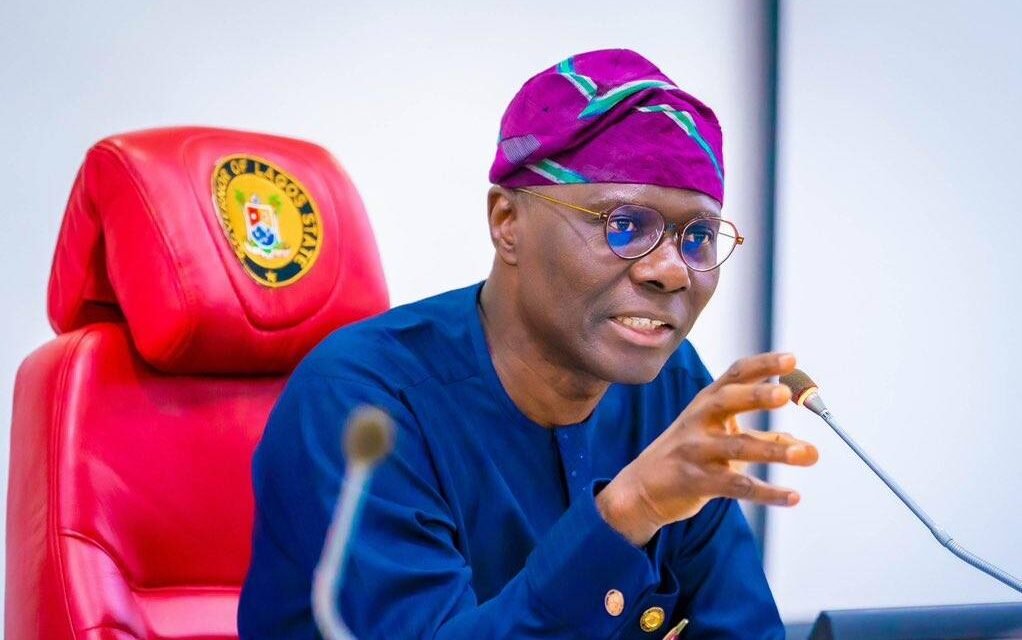
The Lagos State Government has announced the resumption of the monthly environmental sanitation exercise nearly a decade after the programme was suspended.
Residents across the state will be expected to clean their surroundings, clear drainage channels in front of their homes and dispose of waste properly as part of efforts to improve environmental hygiene and tackle persistent waste management challenges.
In a statement on Saturday, the Commissioner for Environment and Water Resources, Tokunbo Wahab, disclosed the development, noting that the exercise will officially resume on 25 April.
![Lagos state Commissioner for the Environment and Water Resources, Tokunbo Wahab [PHOTO: FB Tokunbo Wahab]](https://i0.wp.com/media.premiumtimesng.com/wp-content/files/2024/01/Tokunbo-Wahab-e1705856685366.jpg?resize=1079%2C746&ssl=1)
“I am pleased to inform all Lagosians that the monthly environmental sanitation exercise will resume effective Saturday, 25th April 2026, holding on the last Saturday of every month from 6:30 a.m to 8:30 a.m.,” Mr Wahab said.
He added that residents are expected to participate actively by cleaning their immediate environment and ensuring proper waste disposal.
“During this period, residents are enjoined to clean their surroundings, clear drainage channels in their frontages, and dispose of waste properly as a civic responsibility,” the commissioner said.

Government warns of strict enforcement
Mr Wahab urged residents to see the sanitation exercise as a shared responsibility necessary for maintaining a healthy urban environment, stressing that the state government would enforce compliance.
“This exercise is a collective responsibility and a vital part of our commitment to a cleaner, healthier, and flood-resilient Lagos. And it shall be backed with the full enforcement weight of the Lagos State Government,” he said.
According to him, the decision by Governor Babajide Sanwo-Olu and his deputy, Obafemi Hamzat, to revive the sanitation culture reflects a bold step toward restoring environmental discipline across the state.
“Let me formally say this and say it boldly. Mr Governor and his deputy are taking a very audacious step. For those who don’t know, before 2016, we had a culture that emphasised cleanliness as next to godliness,” Mr Wahab said.
The commissioner explained that Lagos residents previously observed monthly environmental sanitation as a routine civic responsibility.
“Once every month, we took our time to clean up our surroundings and then keep them sparkling. However, for some years, we stopped it,” he said.
He noted that the absence of the exercise over the years has contributed to mounting environmental pressures, including indiscriminate waste disposal and blocked drainage systems.
“Now, waste and environmental challenges have become existential issues for us as a state. It has taken us over a year to debate, discuss and agree that it is time to reintroduce the monthly environmental sanitation,” Mr Wahab added.
Appealing for public cooperation, he urged Lagos residents to devote at least a few hours each month to maintaining environmental cleanliness.
“It’s a plea that it is time for us to give up just one or two hours a month. In our marketplaces, we observe environmental cleanliness every Thursday. But this time we are saying that as a state, let us sit back once a month and observe the cleanliness of our environment as we used to before 2016,” he said.
Background
Monthly environmental sanitation was previously observed across Lagos State on the last Saturday of every month, during which residents were expected to clean their surroundings while movement was restricted for several hours.
However, the exercise was suspended in November 2016 after the state government announced the cancellation of the monthly sanitation day following a meeting of the State Executive Council.
In a statement at the time, the then Commissioner for Information and Strategy, Steve Ayorinde, said the decision was taken to review environmental laws and procedures to address the growing challenges of managing a rapidly expanding megacity.
The government also argued that restricting movement for several hours was no longer appropriate for a commercial hub like Lagos, where residents needed to pursue economic and entrepreneurial activities.
He noted that the state had grown rapidly into a megacity with a population exceeding 20 million people, creating complex environmental management challenges that required modern regulatory approaches rather than periodic lockdown-style sanitation exercises.
READ ALSO: Court remands teenager for allegedly raping a minor in Lagos
The Lagos State government at the time said the policy shift would be accompanied by reforms aimed at strengthening environmental regulations, improving waste management systems, developing modern landfill facilities and promoting voluntary compliance with sanitation laws.
Despite those measures, PREMIUM TIMES had reported poor waste disposal, blocked drainage systems and flooding risks that have persisted in several parts of the state.
It has renewed calls for stronger community participation in environmental sanitation.