
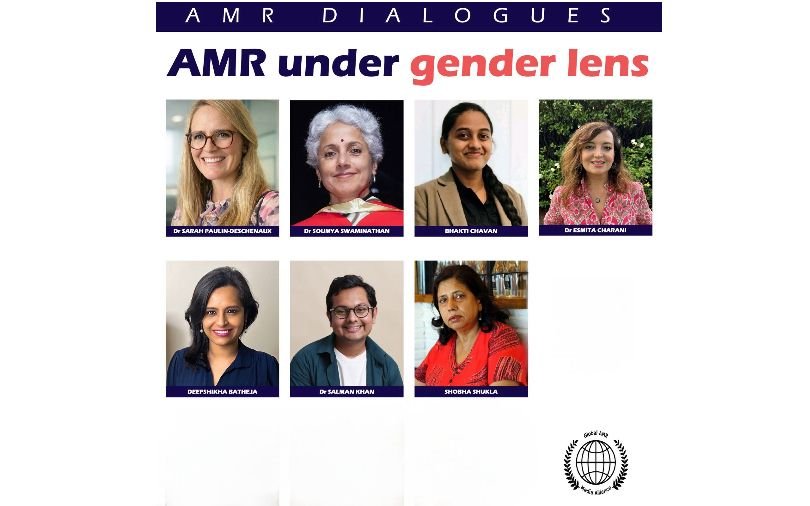
Researchers and public health experts have called for gender-responsive policies to tackle antimicrobial resistance (AMR).
They warned that current responses often overlook the health risks and barriers women face in preventing and treating drug-resistant infections.
The experts spoke during the March AMR Dialogue session titled “AMR under the gender lens,” organised by the Global AMR Media Alliance (GAMA) ahead of International Women’s Day and other global health observances in March.
According to experts, integrating gender considerations into national AMR strategies is essential to improving prevention, diagnosis, and treatment outcomes.
They explained that gender-responsive policies would ensure that AMR programmes address issues such as gender-based violence, barriers to reproductive healthcare, unequal access to treatment, and social norms that influence how women use or access antibiotics.
They said national AMR action plans should include gender-sensitive indicators, better access to sexual and reproductive health services, and integration of services addressing gender-based violence, areas where women are frequently exposed to infections that require antibiotic treatment.

Antimicrobial resistance occurs when bacteria, viruses, fungi and parasites no longer respond to medicines designed to treat them.
It is considered one of the most serious global health threats. It is estimated that bacterial AMR was directly responsible for 1.27 million global deaths in 2019 and contributed to 4.95 million deaths.
Why gender matters in AMR
Soumya Swaminathan, chairperson of the MS Swaminathan Research Foundation and former chief scientist at the World Health Organisation (WHO), said women face unique infection risks that are often not considered in AMR strategies.
Ms Swaminathan noted that women experiencing domestic or sexual violence are more likely to develop infections that require antibiotic treatment.
“Women are at very high risk of intimate partner violence or domestic violence, physical or sexual, which can lead to infections,” she said.
Ms Swaminathan added that delayed healthcare seeking, often due to stigma, financial dependence or lack of decision-making power, can worsen infections and increase the likelihood that stronger antibiotics will be required.
She also highlighted unsafe abortions and limited access to reproductive healthcare as additional drivers of infection among women.
“These are areas where women are exposed to infections, yet they are rarely discussed in AMR strategies,” she said.
Stigma and delayed treatment
Bhakti Chavan, a drug-resistant tuberculosis survivor and member of the WHO Task Force of AMR Survivors, said stigma surrounding diseases such as tuberculosis and HIV can discourage women from seeking early treatment.
“In many communities, a woman diagnosed with TB or HIV is judged not just as a patient but as someone who has brought shame to the family,” she said.
Because of this stigma, some women delay testing or discontinue treatment early, factors that can contribute to the development of drug-resistant infections.
Ms Chavan said tackling AMR requires addressing these social barriers.
“AMR is not gender neutral. If we want to fight AMR effectively, we must listen to women and ensure they have access to timely diagnosis and treatment,” she said.
Social norms influence antibiotic use
Also, the Principal Research Scientist at the Indian School of Business, Deepshikha Batheja, said gender norms influence when and how people seek healthcare and use antibiotics.
Factors such as menstruation stigma, caregiving roles and limited control over household finances can affect women’s ability to access timely medical care.
“These norms shape health-seeking behaviour and can lead to delayed diagnosis or inappropriate treatment,” Ms Batheja said.
She added that research has shown women are prescribed significantly more antibiotics in some settings, highlighting the need to understand gender patterns in antibiotic use.
She noted that improving women’s education and economic participation can also reduce unnecessary antibiotic consumption.
Power dynamics within health systems
According to Associate Professor Esmita Charani at the University of Cape Town, gender dynamics within households and health systems also affect antibiotic stewardship efforts.
Ms Charani explained that women frequently prioritise the healthcare needs of other family members over their own.
“In many settings, women visit hospitals mainly as caregivers for relatives rather than for their own health needs,” she said.
She also pointed out that although women make up a large proportion of the nursing and pharmacy workforce, they often have limited influence in clinical decision-making.
READ ALSO: NAFDAC warns of counterfeit Avastin cancer drug circulating in Nigeria
Women as agents of change
Despite the risks they face, experts said women can play a key role in efforts to curb antimicrobial resistance.
In her comments, the Founding President of the Pan Arab Women Physicians Association, Maisam Akroush, said women often influence healthcare decisions within households.
“They are mothers, teachers, doctors and pharmacists. They can play a powerful role in promoting responsible antibiotic use,” she said.
Targeting women in awareness campaigns could help reduce unnecessary antibiotic consumption and improve treatment adherence.
Participants recommended that governments include gender analysis in AMR strategies, improve access to reproductive healthcare, and ensure that programmes addressing gender-based violence are linked to infection prevention and treatment services.
Shobha Shukla, chairperson of the Global AMR Media Alliance, said addressing antimicrobial resistance requires confronting broader social inequalities.
“We cannot separate the fight against AMR from gender equality and the right to health,” Ms Shukla said.