
The removal of petrol subsidy by the Nigerian government as announced by President Bola Tinubu on 29 May, 2023, led to sharp price increases across the economy, worsening poverty levels, a report has found.
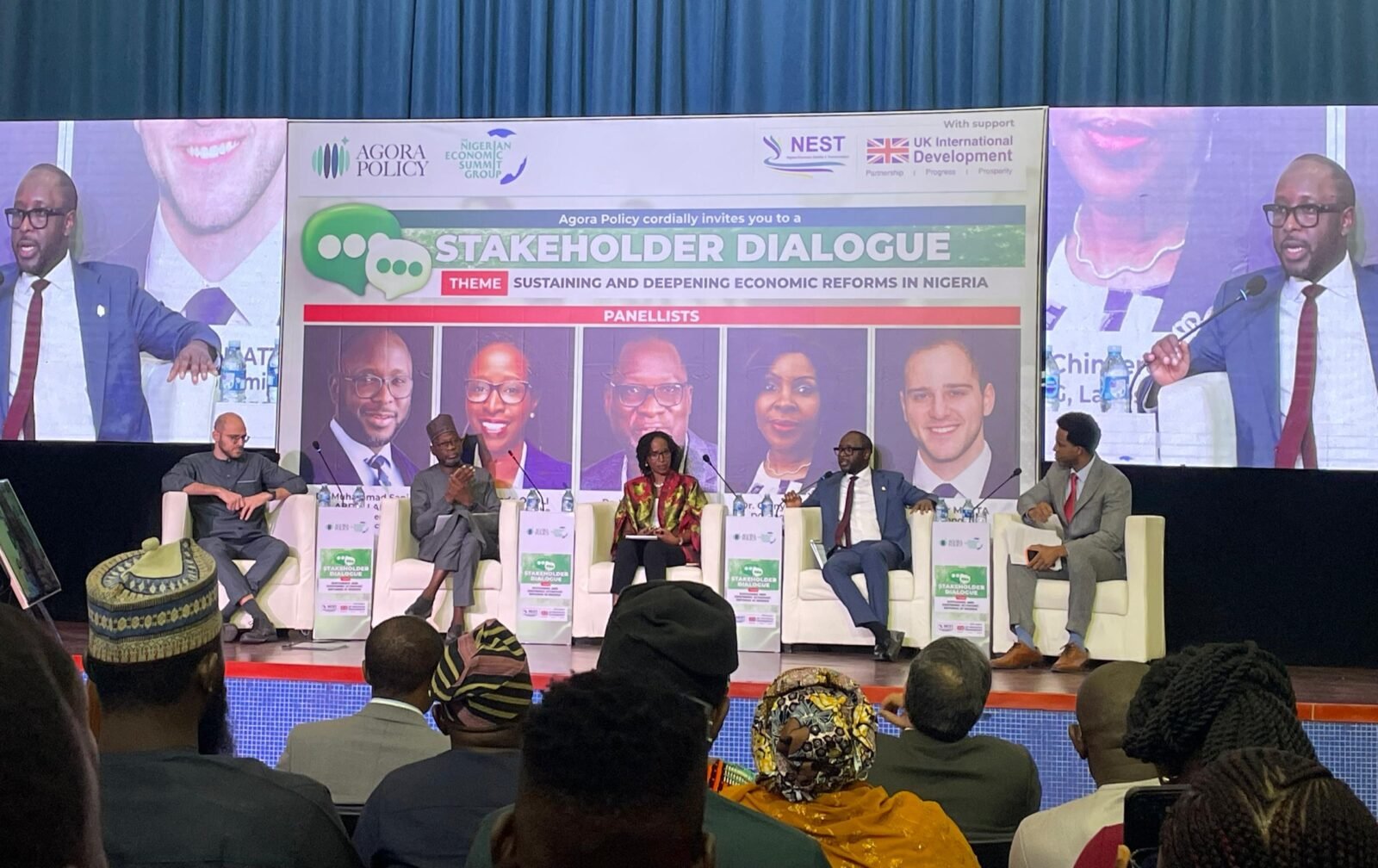
The details are contained in research findings presented by Mohammed Shuaibu of the University of Abuja at a stakeholders’ dialogue organised by Agora Policy in Abuja on Thursday.
“After the subsidy removal, poverty increased from a baseline of about 50 per cent to 63 per cent,” Mr Shuaibu said.
At the event, policymakers, economists, and civil society actors called on the Nigerian government to strengthen social protection programmes to cushion the effects of fuel subsidy removal and other economic reforms.
Subsidy removal, poverty surge
In his presentation, Mr Shuaibu noted that “When social protection measures such as cash transfers were introduced, the poverty rate moderated to around 56.2 per cent, but relief was limited due to delays and small-scale implementation.”
The study highlighted that low-income households bore the brunt of the reforms, experiencing reduced consumption and eroded purchasing power, while wealthier households were largely insulated from immediate effects.

According to Mr Shuaibu, focus group discussions across Nigeria’s six geopolitical zones revealed how households and businesses adjusted. Many families reduced consumption, walked instead of using public transport, rationed electricity, and borrowed money to survive.
“Households adjusted to the shocks not through recovery but through sacrifice,” Mr Shuaibu said.
Vulnerable groups, including women, children, retirees, and rural dwellers, were disproportionately affected. Businesses reported rising costs, downsizing, relocation, or closure. Some increased prices, while others adopted alternative energy sources. Government support promised to ease the transition often did not materialise or was insufficient.
The Country Director of CARE International, Hussaini Abdul, also noted that vulnerable populations faces the effects the most.
“Vulnerable populations, particularly women and rural communities, are facing the sharpest effects. Social protection must reach those most at risk.”
Monetary Policy Perspective
Providing the monetary policy perspective at the event, Muhammad Sani Abdullahi, Deputy Governor for Economic Policy at CBN, said the reforms were necessary to address long-standing distortions in foreign exchange markets, declining investment inflows, and rising inflation.
“At some point, you could access foreign exchange at one rate from the Central Bank and immediately flip it in the market for profit. These distortions cost the country significant economic output over the years,” Mr Abdullahi said.
He noted that combined distortions from fuel subsidy and multiple exchange rates cost Nigeria roughly six per cent of GDP. The CBN inherited a backlog of foreign exchange obligations worth about $7 billion, of which $4.5 billion has been cleared to restore investor confidence.

Earlier, in her keynote address, Ojobo Atuluku, Board Chair of Agora Policy, stressed the importance of continuous engagement:
“Economic policy must never be a one-off event. It should be a continuous conversation between those who design reforms, those who implement them, and those who are affected by them.”
Electricity Tariffs and Growth
The study also examined electricity tariff reforms, which initially raised consumer prices by 0.26 per cent and later 0.52 per cent after social protection measures were introduced.
The adjustment had a modest positive impact on economic growth, with real GDP rising by 0.42 per cent before moderating to 0.21 per cent. Firm-level investment improved but was slightly tempered by the rollout of social protection programmes.
READ ALSO: Nigerian lawmakers canvass removal of electricity subsidy
On his part, Samer Matta of the World Bank, urged the government to expand social protection programmes, strengthen the National Social Register, and ensure timely support for vulnerable populations.
“While the reforms are necessary to address structural weaknesses in Nigeria’s economy, sustained dialogue and stronger safety nets are critical to maintaining public support,” the official noted.
Participants recommended gradual implementation of reforms, targeted support for critical sectors such as food production, logistics, and transportation, and better communication between government and citizens to reduce economic and social shocks.
The event brought together government representatives, private sector actors, and development partners to assess reform progress and discuss strategies for strengthening them.
Attendees included Muhammad Sani Abdullahi, Deputy Governor for Economic Policy at the Central Bank of Nigeria (CBN); Sanyade Okoli, Special Adviser to the President on Finance and Economy; Samer Matta, Senior Economist at the World Bank, Nigeria; Hussaini Abdu, Country Director of CARE International; and Chinyere Almona, Director General at Lagos Chambers of Commerce and Industry, among others.