
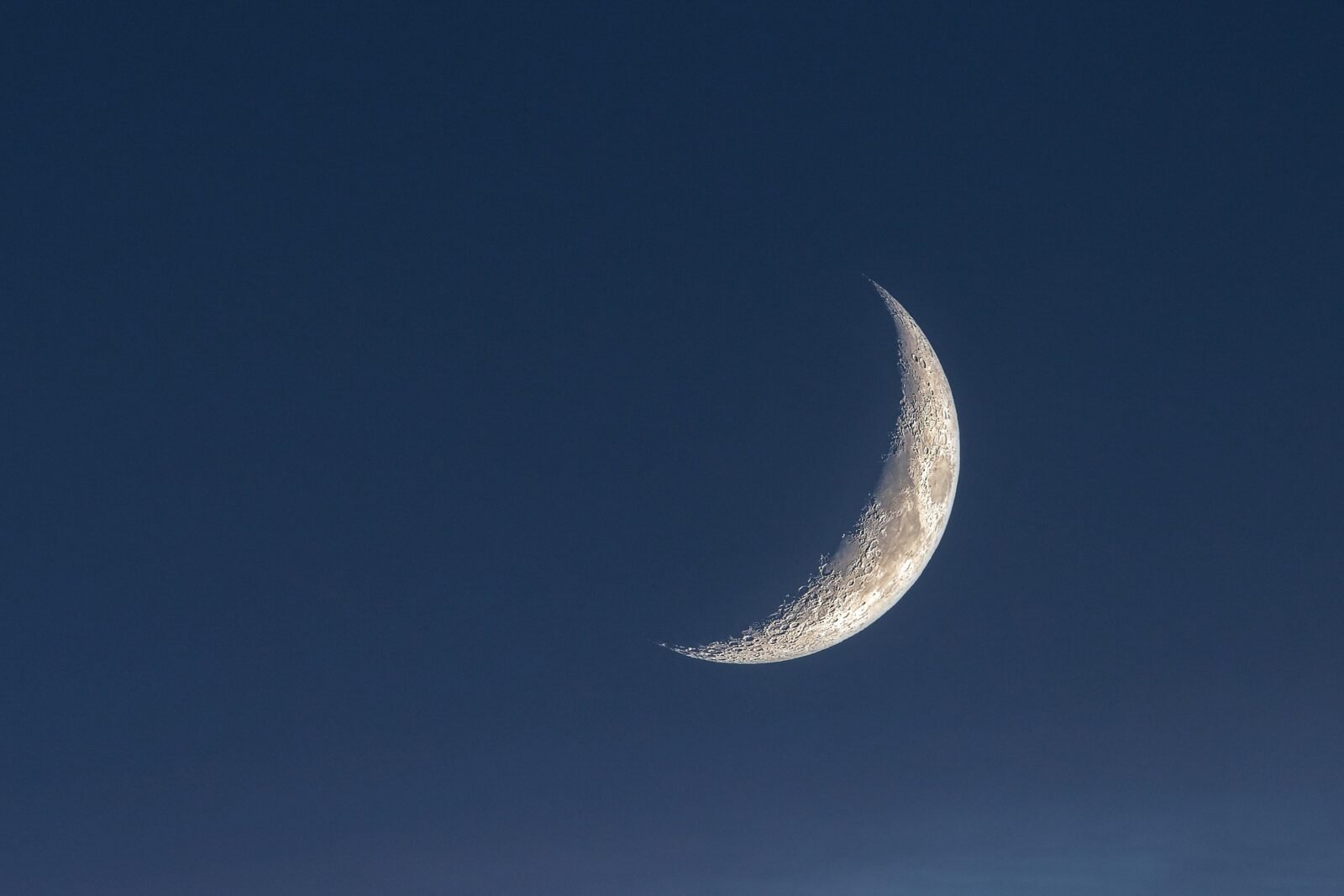
Following the sighting of the crescent moon by the moon-sighting committee on Tuesday, Saudi Arabia has announced that the first day of fasting will be Wednesday, 18 February.
“Crescent has been SIGHTED. Subsequently, tomorrow, i.e., Wednesday, 18 February 2026, will be the first day of Ramadan 1447,” a statement on the official Facebook page of the holy mosques read.
“After reviewing, examining, and considering all that was received, and in light of what was stated in the Supreme Court’s Decision No. (203/H) dated 29/7/1447 AH, that Tuesday, 1/8/1447 AH corresponding to 20/1/2026 was the first day of Sha‘ban for 1447 AH, and since several trustworthy witnesses have testified to seeing the crescent of the blessed month of Ramadan tonight, and based on what is authentically reported from the Prophet (peace be upon him) that he said: “Fast when you see it, and end the fast when you see it” (agreed upon), the Department rules that tomorrow, Wednesday, 1/9/1447 AH — according to the Umm al-Qura calendar — corresponding to 18/2/2026, will be the first day of the blessed month of Ramadan for this year, 1447 AH,” the Saudi Supreme Court said in a statement.
Other countries follow their own moon sightings. Some use astronomical calculations for lunar phases, while others rely on traditional local sightings to confirm the start of the new month.
Ramadan is determined by the Islamic lunar calendar, which begins with the sighting of the crescent moon. Saudi Arabia and other Muslim-majority countries rely on the testimonies of moon sighters to determine the start of the month.
Nigerian Muslims still await the announcement of the sighting of the moon in the country.

The Nigerian Supreme Council for Islamic Affairs (NSCIA) advised Nigerian Muslims to look out for the crescent (moon) of Ramadan from Tuesday.
NSCIA said the search for the new moon should commence immediately after sunset on Tuesday, 17 February, which is equivalent to 29th Sha’aban 1447 AH.
The council noted that if the crescent is sighted by “Muslims of impeccable character”, then the head of the NSCIA and Sultan of Sokoto, Saad Abubakar, will declare Wednesday as the first day of the 2026 Ramadan.
“If, however, the crescent is not sighted that day, then, Thursday, 19 February 2026, automatically becomes the first of Ramadan, 1447 AH,” the NSCIA statement read.
Ramadan is the ninth lunar month of the Islamic calendar, observed by Muslims worldwide as a month for fasting, prayer, reflection, and assisting the needy.
Throughout the month, Muslims fast from just before the sunrise prayer, Fajr, to the sunset prayer, Maghrib.
The fast entails abstinence from eating, drinking, smoking, and sexual relations to achieve greater “taqwa”, or consciousness of God.
Fasting is one of the five pillars of Islam, along with the Muslim declaration of faith, daily prayers, charity, and performing the Hajj pilgrimage to Mecca if physically and financially capable.
How is the Ramadan moon sighted?
For the moon to be visible, the crescent must set after the sun. This allows the sky to be dark enough to spot the small sliver of the new moon.
If the moon is sighted, the month of Ramadan begins.
READ ALSO: Religious bodies warn of AI being used to undermine religion
In Saudi Arabia, testimonies of people who have spotted the moon are recorded, and the Supreme Court makes a decision on when Ramadan should begin.
Muslims believe that Ramadan is the month when the first verses of the Quran were revealed to the Prophet Muhammad nearly 1,450 years ago.
Various Muslim-majority nations have a personalised greeting in their native languages.
“Ramadan Mubarak” and “Ramadan Kareem” are common greetings exchanged over the month, wishing the recipient a blessed and generous month.