
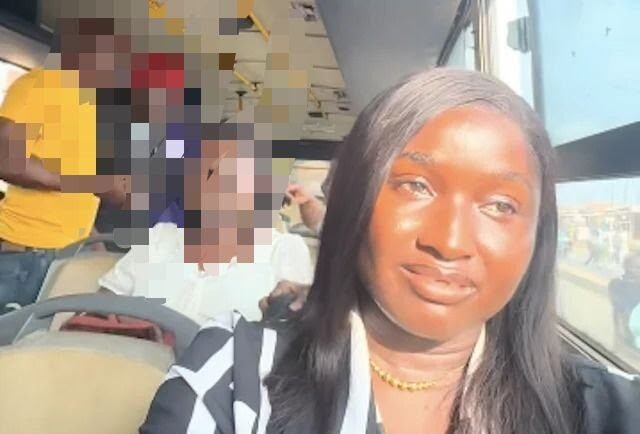
The National Data Protection Commission (NDPC) has cautioned content creators against filming Nigerians without their consent.
The warning, issued in a statement signed by Babtunde Bamigboye, head of Legal, Enforcement and Regulations at the Commission, followed a controversy involving Lagos-based TikToker Ella.
Ella alleged in a TikTok video that she was harassed by staff at a Bus Rapid Transit (BRT) terminal while documenting long queues and bus shortages at the Ikorodu terminal.
She posted a video showing passengers waiting in long lines at the terminal, claiming commuters often spend more than two hours before boarding.


Consent breeches
In response, the Commission emphasised that filming Nigerians without their consent breaches their right to informational self-determination.
The NDPC said: “The attention of the Nigeria Data Protection Commission (NDPC) has been drawn to the activities of individuals who take pictures and video footage of unsuspecting members of the general public and share the same on social media platforms.
“These acts violate the rights of citizens to informational self-determination as guaranteed under S.37 of the 1999 Constitution of the Federal Republic of Nigeria and the Nigeria Data Protection Act, 2023 (NDP Act).”
The Commission further stated that its preliminary investigation found that Ella’s deliberate intrusion into citizens’ privacy served neither the public interest nor any legitimate purpose.

Community guidelines
In addition, Vincent Olatunji, NDPC national commissioner and CEO, directed platform owners, including TikTok, X, and Meta, to strengthen enforcement of their community guidelines.
The Commission emphasised that this measure would help protect individuals from harm arising from the unlawful or unfair processing of personal data.
“The particular case of a content creator who stands at roadsides in Lagos State to create a “reality show” of unsuspecting members of the general public raises concerns about abuse of rights in the name of entertainment. Processing images of people in this circumstance requires consent unless the creator can justify their actions under another lawful basis for data processing.
“In any event, the data subjects involved have no expectation that their images will be captured and shared with the whole world by an unknown individual. For the avoidance of doubt, where a platform owner fails or neglects to act timeously in addressing harms, the Commission will not hesitate to impose appropriate sanctions under the NDP Act”, said the commission.
The Commission warned that content creators in Nigeria could face criminal prosecution if they violate the privacy rights of citizens or other data subjects.
The NDPC emphasised that creators are fully accountable for their actions and omissions.
LAMATA speaks
However, the Lagos Metropolitan Area Transport Authority (LAMATA), the regulatory body overseeing the BRT, acknowledged Ella’s concerns.
In a statement posted on its X page on Thursday and signed by its Head of Corporate Communications, Kolawole Ojelabi, LAMATA said it was working with private-sector partners to accelerate the introduction of additional buses into the system.
“We appreciate the feedback provided, as it helps strengthen our regulatory oversight and improve service delivery across the regulated public transport system. LAMATA recognises the increasing demand for additional buses across the network. This surge is largely driven by the relatively affordable and reliable services available within the regulated public transport system.
“In the context of global economic pressures and rising fuel costs, regulated transport has become an essential mobility lifeline for many Lagosians. To address this growing demand, LAMATA is actively working with private sector partners to accelerate the introduction of more buses into the system”, the authority said.
LAMATA further clarified that the person involved is a supervisor employed by a private Bus Operating Company (BOC) and is not directly employed by LAMATA.
“Nevertheless, as the regulator of the system, LAMATA takes such concerns seriously and continues to engage with operators to ensure that service standards and commuter experience are maintained.
“LAMATA also wishes to advise content creators to be mindful of existing privacy laws when producing and sharing content on public transport. We have received complaints from commuters regarding the unauthorised capture and publication of their images and videos online.”
READ ALSO: ACAMB educates content creator to curb misinformation on bank recapitalisation
Privacy
LAMATA further urged content creators to respect passengers’ privacy and obtain proper consent before recording or publishing any material involving commuters.
It stressed that it would not accept responsibility for any breach of commuters’ privacy arising from content produced or shared by third parties.
LAMATA added that the state government had invested significantly in world-class transport infrastructure, including modern rail systems, water transport terminals and dedicated bus corridors.
“To fully maximise these assets, greater operational capacity is required. In this regard, we encourage and welcome private sector participation in the public transport ecosystem. There remains a substantial opportunity for investors and operators to contribute the fleet capacity needed to move Lagos efficiently and sustainably.
“LAMATA remains committed to ensuring that every Lagosian has access to safe, reliable, affordable, and dignified transportation”, said LAMATA.