
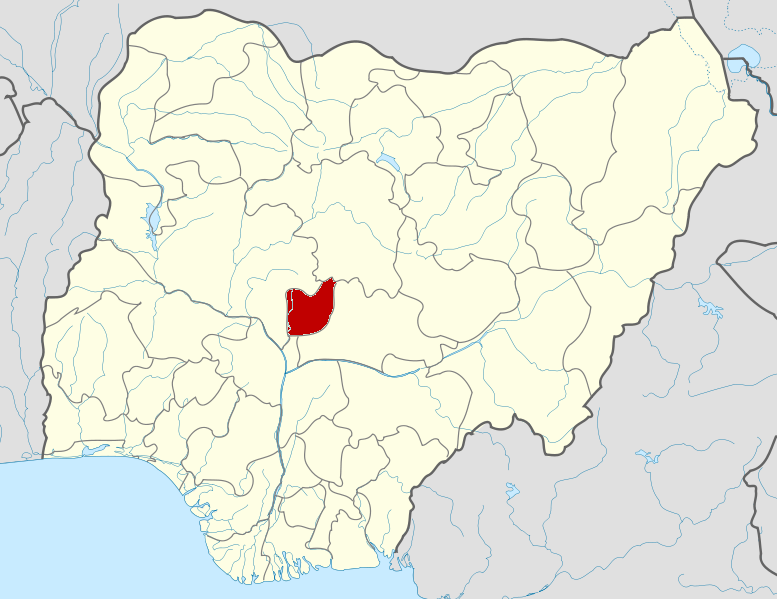
Ahead of the 21 February FCT Area Council elections, some streets, marketplaces, and community halls of the territory are buzzing with expectations.
The Independent National Electoral Commission (INEC) will conduct the elections in 2,822 polling units across 62 wards in the six area councils: Abaji, Abuja Municipal Area Council (AMAC), Bwari, Gwagwalada, Kuje, and Kwali.
These elections are often called “local government elections” in the 36 states of the federation, but in the FCT, they are called “area council elections” and arguably carry greater importance.
This is because, unlike states with elected governors and state assemblies, the FCT is administered by a federally appointed minister. Its area councils are the closest elected bodies to the people, providing essential services such as water, sanitation, local roads, schools, and healthcare. That makes their decisions highly visible and directly felt in everyday life.
This simply makes this election a rare moment when residents, from the bustling streets of the city to remote rural wards on the territory’s edge, get a say in how schools, markets, roads, water systems, and community clinics are run.
The last area council polls were held on 12 February 2022, resulting in a split outcome: three councils won by the Peoples Democratic Party (PDP) and three won by the All Progressives Congress (APC).

READ ALSO: FCT Council Elections: Two chairpersons seek re-election
Over 400 candidates, including their running mates, contested these positions on the platforms of 14 political parties.
Meanwhile, area council elections in the FCT typically record lower participation than national polls, partly due to limited voter awareness and scant knowledge of the candidates.
In some rural wards, voters know the candidates by name, family lineage and community history. Yet there is another side to the story.
Unlike presidential or National Assembly contests that receive sustained media coverage and party mobilisation at scale, local elections often attract minimal publicity beyond ward-level campaigns. As a result, many residents, particularly in urban centres such as AMAC, struggle to identify the chairmanship or councillorship candidates on the ballot or to differentiate their policy positions.
In AMAC’s fast-growing estates and densely populated urban settlements, many residents admit they are aware that an election is coming, but cannot name a single chairmanship candidate.
A Wuye District resident, Catherine Onyeka, said she had little information about the poll.
“I heard there is an election, but I’m not aware of which election in particular. Neither am I aware of who is running for what,” she said.
At a busy market in Karu, Noral Ihonre, a young entrepreneur, echoed similar concerns. She said, “I know there is an election, but I don’t really know the people running.”
In Abaji, Aisha Lamido, a mother of three, said, “Some candidates are familiar because of their community work, but many are new. I want someone who will make sure the schools are functional and the children can learn without worrying about an unsafe environment.”
Chinedu Okeke, 27, a petty trader in Dutse, said the focus should be on jobs and opportunities.
According to him, “It’s not enough to vote for a party. We need to know the people who will actually help us get skills, support small businesses, and improve our environment.”
These voices underscore why this report will focus on the profiles of the top candidates across the six area councils, highlighting their background, experience, and connection to the communities they hope to serve.
Understanding who these candidates are is critical for voters who will decide on the leaders closest to them on Saturday.
Female candidates
INEC’s final list shows that only three women are contesting for chairmanship across the six area councils. This figure represents less than 5 per cent of the total number of chairmanship candidates.
In Abaji, Anumnu Abigail of the Action Alliance is the only female candidate for chairmanship. AMAC has Richard Elizabeth of the Action Democratic Party, while Kuje features Aju Ukwa of the Zenith Labour Party as its sole female chairmanship candidate.
In Bwari, Gwagwalada and Kwali, no woman is contesting for the top seat.
However, female participation is relatively higher in the vice-chairmanship category, where several parties fielded women as running mates.
Profiles of the leading candidates
Abaji
INEC has cleared seven candidates for the Abaji chairmanship election.
Of the total, three are widely considered leading contenders: Sokodabo Bilyaminu (PDP), Umar Abdullahi (APC), the incumbent chairman seeking re-election, and Mohammed Ibrahim (ADC).
Umar Abdullahi (APC)
Mr Abdullahi, a native of Abaji and the APC flagbearer, has campaigned on a continuity platform. As the incumbent, he is the candidate to beat in the election.
He has a business background with years of experience in local commerce and agro-trade in Abaji.
With the APC having held Abaji in the last cycle, his campaign leans heavily on administrative continuity and the consolidation of ongoing projects, particularly in school rehabilitation and market development.
Sokodabo Bilyaminu (PDP)
Mr Bilyaminu emerged from what party officials described as a consensus process during the PDP primaries in 2025.
He built his political base through grassroots party organisation in Abaji. Before clinching the PDP ticket, he served in local party executive roles and was involved in ward-level mobilisation during previous council and national elections.
He has also worked within community development structures, particularly in farmer cooperatives and youth advocacy platforms.
His campaign centres on rural infrastructure, particularly feeder roads linking agrarian communities to markets, improved primary healthcare centres and youth empowerment schemes.
Mohammed Ibrahim (ADC)
Mohammed Ibrahim has been active throughout the campaign cycle, participating in grassroots engagements alongside high-profile ADC supporters, including former presidential candidate Peter Obi.
His candidacy represents the ADC’s push to broaden its reach at the local government level, focusing on community-led interaction and voter mobilisation ahead of the polls.
Abuja Municipal Area Council (AMAC)
INEC has cleared 16 candidates for the AMAC chairmanship race. Among them, Zadna Dantani (PDP), Christopher Maikalangu (APC), and Moses Ogidi (ADC) were initially on the ballot.
However, less than 48 hours ahead of the election, Mr Dantani stepped down in favour of the APC candidate.
Mr Dantani said his decision followed interventions by the Minister of the Federal Capital Territory, Nyesom Wike, and confirmed that he had submitted a formal withdrawal letter to INEC.
Christopher Maikalangu (APC)
Mr Maikalangu is the incumbent AMAC chairman. He was elected on the PDP platform in 2022 but defected to the APC last year.
He says he has performed well and deserves a second term in office. He has based his campaign on continuity and working with the APC-controlled federal government.
Mr Zakka has built his political profile through party organisation and grassroots mobilisation.
His incumbency and Mr Dantani’s late withdrawal have made him the dominant figure in the chairmanship race.
Moses Ogidi
Mr Ogidi, known as “Dr Mo,” is the ADC flagbearer in the election.
He is a community‑minded politician who branded himself as a voice for the underserved in AMAC, stressing the need for local accountability, improved civic services, and youth engagement.
A graduate of the University of Abuja, he serves as the convener of the Free Nigeria Movement, a coalition of civil society organisations, youth, and women’s groups dedicated to promoting good governance, responsible citizenship, and social activism. The movement engages in advocacy across multiple levels, addressing social challenges through innovative programming and capacity‑building initiatives.
His work spans capacity building, coaching, creative discourse, and interventions designed to harness and prioritise human ingenuity.
Bwari Area Council
INEC has cleared 11 candidates for the Bwari chairmanship contest.
The main contender is Joshua Ishaku of the APC, following the withdrawal of Julius Adamu (PDP) from the race.
Mr Adamu said he had “deep consultation” with Mr Wike and had decided to step down to support Mr Ishaku in the upcoming election.
The incumbent chairman, John Gabaya, is not on the ballot.
Joshua Ishaku (APC)
Joshua Ishaku emerged as the APC chairmanship candidate for the Bwari Area Council following a protracted legal dispute over the nomination process. In a majority 4-1 judgement, the Supreme Court of Nigeria declared him the lawful APC candidate just five days to the local election, setting aside earlier rulings from lower courts and affirming that he was the legitimate winner of the APC primary held on 25 June 2025.
Mr Ishaku challenged a decision by the party’s internal appeal panel and subsequent judgements that had recognised another aspirant, Haruna Audi, as the APC candidate. The apex court ruled that his suit was not statute‑barred and that the dispute transcended internal party affairs, especially where constitutional rights and statutory safeguards under Section 84(14) of the Electoral Act were engaged.
At the party primary, Mr Ishaku reportedly polled all 33 votes cast by delegates, a result that became the centrepiece of his legal victory after evidence showed he was validly nominated and that subsequent internal party processes did not lawfully overturn that outcome.
Gwagwalada Area Council
INEC has cleared 11 candidates for the Gwagwalada chairmanship race.
The main contenders are Yahaya Shehu (APC) and Mohammed Kasim (PDP).
The incumbent chairman, Abubakar Giri, is not seeking re-election this cycle, making this a competitive open seat.
Yahaya Shehu (APC)
Mr Shehu is the APC’s flagbearer in Gwagwalada.
He is known locally as a community leader and party organiser within APC structures in the Gwagwalada area, emphasising continuity of development and stronger grassroots engagement in his campaign messaging.
Mohammed Kasim (PDP)
Mohammed Kasim, the PDP’s chairmanship candidate for Gwagwalada, emerged through the PDP primary process, defeating other aspirants within his party.
His campaign focuses on community welfare, women’s empowerment, improved healthcare services, and enhanced education opportunities for children, signalling a people‑centred governance agenda.
Kuje Area Council
INEC has cleared 11 candidates for the Kuje chairmanship election.
The leading candidates are Zakwoyi Danlami (PDP) and Danluma Shekwolo (APC).
The incumbent chairman, Abdullahi Sabo, is not on the ballot, also making this a competitive open seat.
Zakwoyi Danlami (PDP)
Zakwoyi Danlami is the PDP’s flagbearer for the Kuje Area Council chairmanship election. He emerged from the PDP primary process after his sole opponent, Michael Jigu, withdrew, giving him unanimous support from party delegates.
He has been active in local community engagement and outreach during the campaign period. For example, he attended the 2026 ECWA Women Fellowship Conference in Pyakasa, where he emphasised his respect for community institutions and inclusive leadership that recognises the role of women in community development, peacebuilding, and social progress.
His campaign messaging centres on bringing people‑centred governance to Kuje, focusing on serving all segments of society, promoting unity, and working collaboratively with religious, civic, and grassroots groups.
Danluma Shekwolo (APC)
Mr Shekwolo, the APC candidate, is positioning himself as an alternative focused on fiscal discipline and accelerated infrastructure development.
Mr Shekwolo is an APC stalwart in Kuje who has held party executive roles at the council level. His background includes community leadership and political coordination.
His outreach strategy includes town-hall meetings across wards, where he has pledged transparent budget implementation.
Kwali Area Council
INEC has cleared nine candidates for the Kwali chairmanship contest.
The principal contenders are Haruna Pai (PDP) and Daniel Nuhu (APC).
The incumbent chairman, Danladi Chiya, is not seeking re-election.
Haruna Pai (PDP)
Mr Pai emerged from a three-way primary contest within the PDP.
He has been active in local political structures and has worked with farming cooperatives and youth groups.
His campaign narrative focuses on rural development, water access and agricultural mechanisation.
Daniel Nuhu (APC)
Mr Nuhu, the APC standard bearer, is campaigning to restore what he calls structured governance and expand market access for agricultural produce.
He has previously contested council positions and served in party leadership roles within the APC in Kwali.
He has pledged to attract partnerships for agro-processing initiatives.
His strategy relies on consolidating APC’s base in key wards while appealing to undecided voters dissatisfied with existing service delivery.
Experience versus momentum
Across the six councils, a pattern emerges: only two incumbents are seeking re-election (in AMAC and Abaji, both APC), some candidates rely on previous executive experience, while others lean on party machinery and grassroots networks.
As voters head to the polls on 21 February, the interplay between experience, grassroots credibility and party structure will likely determine who controls governance at the heart of Nigeria’s capital.