
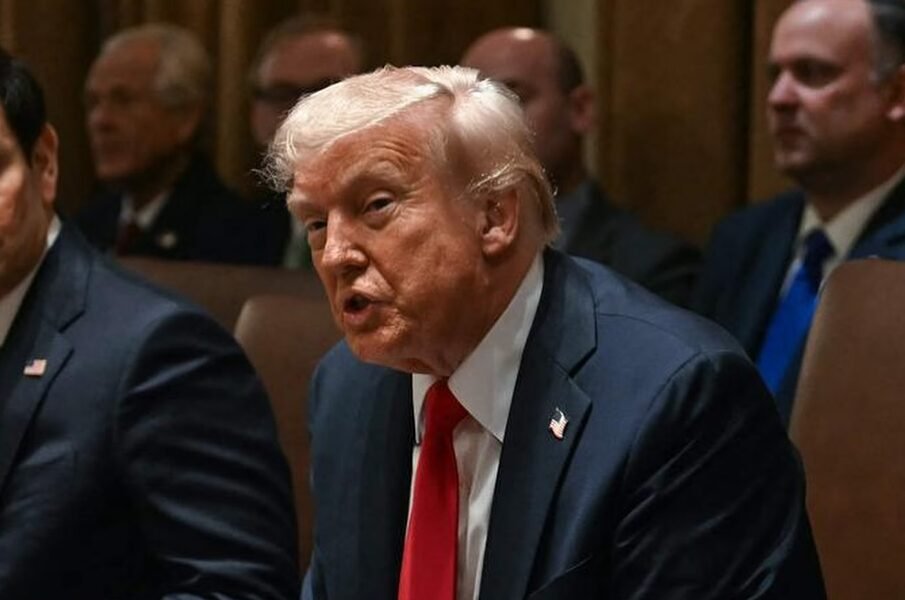
US President Donald Trump is considering carrying out an initial strike against Iran to compel its leaders to give up their nuclear ambitions and reach an agreement.
The New York Times reports that Mr Trump is leaning towards conducting the strike in the coming days to show Iranian authorities that they have no choice but to give up the production of nuclear weapons. This is despite Iran repeatedly stating it has no plans to build nuclear weapons, and world leaders condemning the American plans to invade Iran.
Since the start of the year, the US has been amassing troops and equipment in the Middle East in what has been described as the largest such deployment in over two decades.
Earlier in the year, Mr Trump told Iranian protesters that “help” was on the way, threatening to bomb Iran, but eventually stepped back, saying that the execution of protesters had stopped.
Negotiations between the two countries have been ongoing amid rising tension. Indirect talks, which paused after the 2025 US attack on Iranian facilities, resumed weeks ago.
Mr Trump met top officials at the White House Situation Room to discuss potential strikes on Iran last Wednesday.

He told his advisers at the meeting that he is weighing the possibility of military action should the ongoing negotiations with Iran fail.
The New York Times revealed that Mr Trump told his advisers that he would be considering carrying out major attacks in the coming months should negotiations fail to produce the desired result.
The possible sites for attack range from Iran’s Islamic Revolutionary Guard Corps to the country’s nuclear sites to the ballistic missile programme.
Mr Trump also told his advisers that he is open to taking required steps to topple the Iranian Supreme Leader, Ayatollah Khamenei. But there are doubts that these plans can be executed only by airstrikes.
According to The New York Times, US officials had earlier considered deploying special operations forces to conduct raids on deeply buried Iranian nuclear and missile facilities beyond the reach of conventional weapons.
However, such missions would be extremely risky, requiring troops to remain on the ground far longer than during the operation to capture Nicolás Maduro.
For now, plans for a commando raid have been put on hold, the New York Times quoted officials as saying.
Iran has vowed to retaliate against any American strike and has said all US interests, including bases and personnel, in the Middle East are legitimate targets.
Talks between both parties are expected to continue in Switzerland this week.
US, Iran demands
The US Middle East envoy, Steve Witkoff, told Fox News that Mr Trump had directed him and Jared Kushner, the president’s son-in-law and unofficial aide, that there would be “zero enrichment” for Iran.
He said Mr Trump also wants Iran to release to the US the nuclear material in its possession.
Mr Witkoff said the US position is that Iran must not enrich uranium and must hand over its more than 400kg of stockpiled material.
“There have been some very hard red lines drawn,” he said.
He also claimed that Iran could be about “a week away” from producing industrial-grade bomb-making material.
He called such a situation “very dangerous.”
However, Iran has indicated repeatedly that it would strike back at a foreign attack on its bases, assets, or facilities.
PREMIUM TIMES reported a recent letter to the United Nations in which the country made it clear that it would respond decisively to any military aggression.
Although it rejected the demand for “zero enrichment,” Iran said it is ready to compromise on its nuclear programme, which it says is for peaceful purposes.
The country is willing to export a portion of its stockpile, reduce the enrichment level of its most highly enriched uranium, and consider forming a regional enrichment consortium.
In return, Iran wants formal recognition of its right to pursue peaceful nuclear enrichment.
It also wants the removal of US sanctions that have made it difficult for it to trade with many countries.
Mr Wittkoff said the next round of talks will occur in Geneva on Thursday.
He also said Mr Trump is curious as to why Iran has yet to reach an agreement despite being under US pressure.