
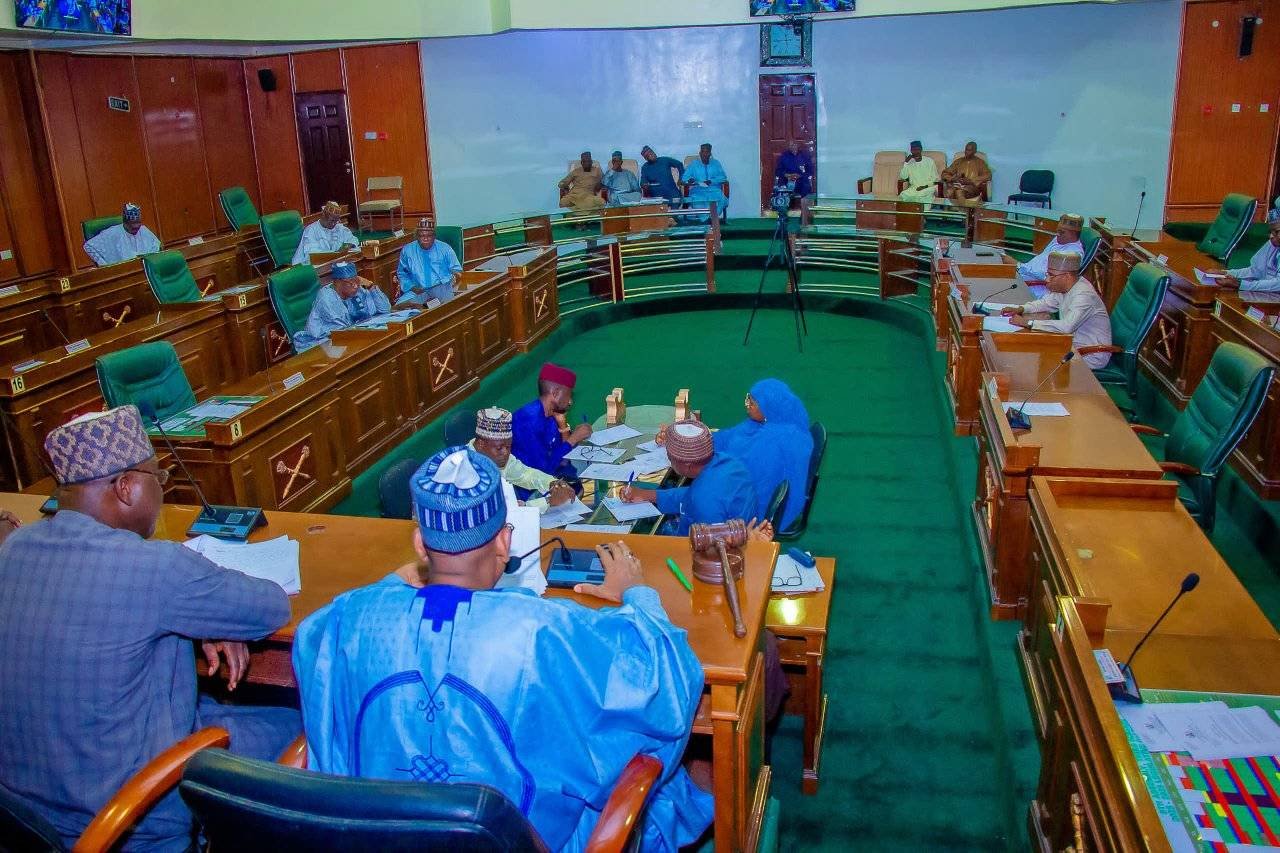
The Yobe State House of Assembly has advanced a bill to establish the Yobe State Agency for Drug Abuse Control and Rehabilitation (YOSADAC) to coordinate prevention, treatment and recovery services across the state’s 17 local government areas.
The bill, listed as YBHA No. 31, passed second reading this week and has moved to the committee stage, with public hearings scheduled for 8 and 9 March.
If enacted, the agency would mark Yobe’s most structured attempt yet to confront a crisis that civic leaders say is eroding the region’s social fabric.
From Enforcement to Rehabilitation
In classrooms, motor parks and quiet family compounds across Yobe State, drug dependency has become an increasingly visible struggle. Now, lawmakers say the state can no longer respond with sermons and sporadic arrests alone.
Nigeria has a federal enforcement body, the National Drug Law Enforcement Agency (NDLEA). But enforcement alone, state officials argue, has not stemmed the tide of addiction.
Hassan Jakusko, Yobe’s Focal Person on Drug Abuse Control, says the scale of need inside the state is already measurable.

According to him, 609 confirmed drug users currently require immediate rehabilitation, while nearly 1,000 others need structured six-month intervention programmes.
“Families are enduring enormous financial and emotional stress due to the lack of rehabilitation resources in the state,” Mr Jakusko said. “Untreated addiction is driving crime, mental health disorders and social breakdown.”
Currently, families often resort to expensive private rehabilitation centres outside the state — an option many cannot afford. The proposed agency would seek to establish state-backed facilities, lower access barriers, and integrate recovery into the public health framework.
The policy shift is subtle but significant: addiction is framed not only as a moral failing or criminal offense, but as a public health and social development challenge requiring sustained institutional response..
Civil Society’s Warning: “A National Crisis”
The legislative push comes amid heightened advocacy from the Coalition of Northern Groups (CNG), which has intensified its anti-drug campaign across northern states.
During a recent sensitisation programme at the Federal Polytechnic Damaturu, the coalition’s National Coordinator, Jamilu Charanchi, described escalating youth drug use as “a national crisis threatening the region’s social and moral fabric.”
Mr Charanchi cited figures attributed to the NDLEA indicating that in some northern states, between 40 and 50 per cent of students are involved in drug use. He also pointed to a recent seizure of over five million tramadol pills in Kano within a single month, warning that interceptions represent only a fraction of narcotics in circulation.
While such figures require independent verification, they underscore the level of alarm driving both advocacy and legislative action.
Civil society groups increasingly link substance abuse to broader insecurity challenges — including youth violence and recruitment into criminal networks — particularly in conflict-affected northern regions.
The Solutions Test
Unlike previous reactive crackdowns, YOSADAC is designed as a layered intervention rather than a single enforcement tool. At its foundation is localised prevention — sustained community-based education campaigns embedded in schools, mosques and youth centres, where early awareness can disrupt pathways into substance abuse.
Beyond prevention, the agency envisions state-backed rehabilitation through the establishment of accessible treatment facilities within Yobe, reducing families’ dependence on costly private centres outside the state.
READ ASO: Troops kill terrorists in Yobe — Official
Just as crucial is structured reintegration: post-recovery support systems aimed at lowering relapse rates, easing social stigma and helping recovering users return to school, work and community life with dignity.
Yet passage of the bill will mark only the beginning.
The harder test lies in implementation. Much will depend on what allocation the agency receives in the 2026 budget and whether rehabilitation centres extend beyond the state capital into underserved local government areas.
Lawmakers will also need to define clear performance metrics — whether success will be measured by reduced arrests, tracked relapse rates, improved mental health outcomes or restored youth employment. Equally important are oversight safeguards to ensure the agency does not become another underfunded institution that exists only on paper.
For Yobe, the real benchmark will not be legislative approval, but whether, by this time next year, a struggling teenager in Damaturu can access structured treatment inside the state — instead of entering the criminal justice system or slipping further into dependency.
As public hearings open in March, lawmakers face a defining choice: whether to create an agency in name or build an institution capable of reversing a generational crisis.